MDKit Pro
Creative Tool Platform
A home for the tools everyone wants to build.
I led the development of Hot Seat, a shared platform that brings independently built tools into one discreet panel inside After Effects.
It gives designers an easier way to try new ideas, and tool authors the infrastructure to test, distribute and improve what they create.
For years, I'd been building After Effects extensions to make our motion team's work easier. Then AI-assisted coding opened that possibility up to more people. Colleagues had ideas for tools of their own, and increasingly, they could build them.
That was exciting. But distributing every experiment as another extension for the whole team to install, update and navigate wasn't going to work for long. Some tools were ready for everyday use; others needed testing and feedback. They shouldn't all arrive in someone's workspace with the same expectations.
I proposed Hot Seat: one shared home for tools inside After Effects, with a way for people to publish, try and improve them without making everyone responsible for every experiment.
I led the product direction and development, inviting other team members to contribute while keeping the experience focused on the person doing the work.
The interface is intentionally small. Hot Seat occupies a slim toolbar above whichever tool is active. Designers choose another tool from a menu, or open settings, feedback and refresh controls when they need them. The rest of the space belongs to the tool they've chosen.
The host needs to be installed once. After that, new tools and updates can be distributed through the platform rather than asking every designer to install another extension. Tool authors can publish and manage releases through a Slack integration, with the platform handling distribution to the After Effects panels.
A lot of the work is deliberately invisible. That's the point: the platform shouldn't compete with the tools it exists to support.
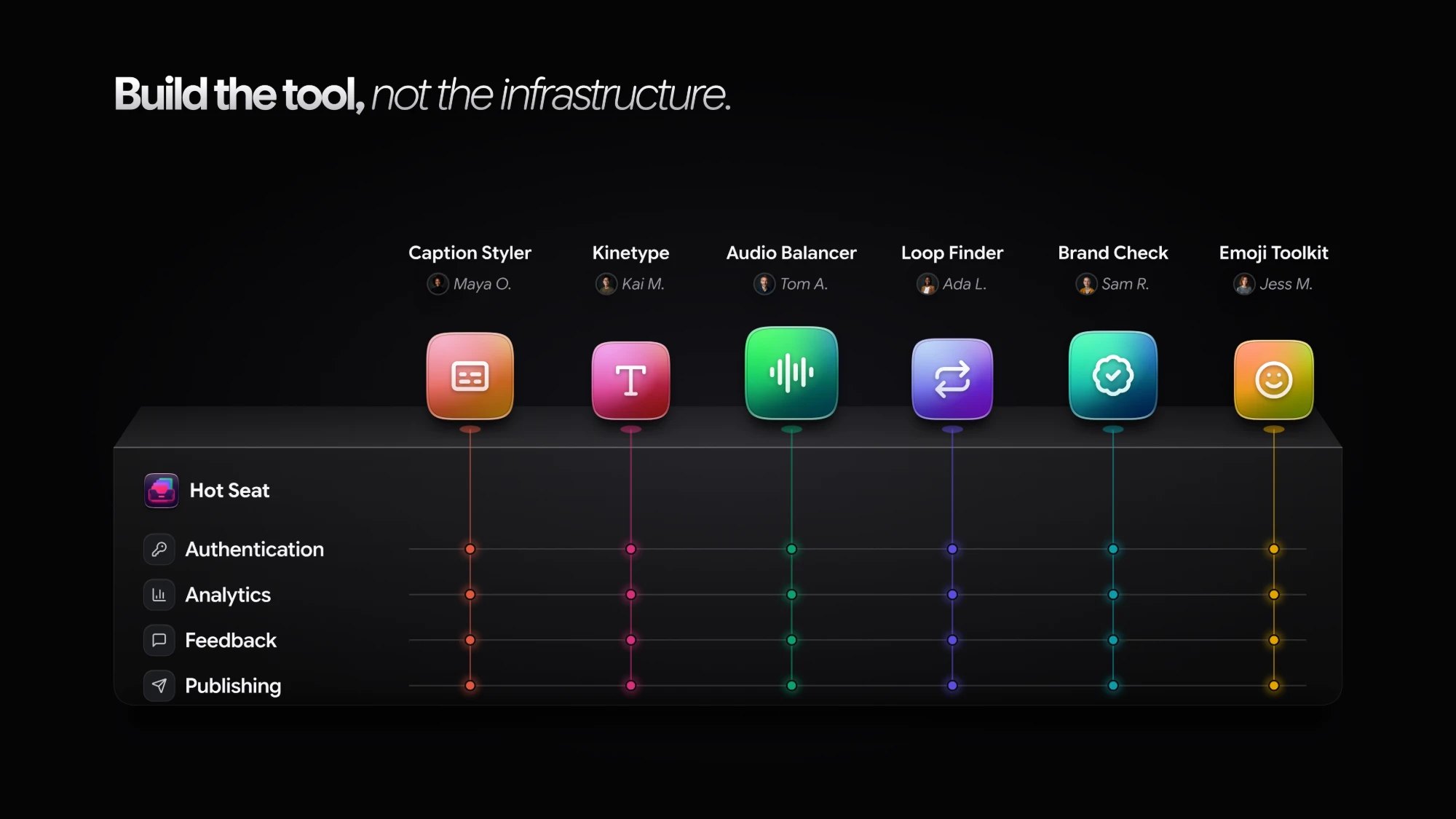
Distribution was only half the problem. Every new tool author also needed some of the same foundations: access control, a way to understand whether people were using their tool, and somewhere for problems or suggestions to go.
Hot Seat provides shared sign-in, tool-level usage analytics and a feedback route that connects comments to the relevant author. Instead of rebuilding those services each time, developers can focus more of their effort on the thing they actually wanted to make.
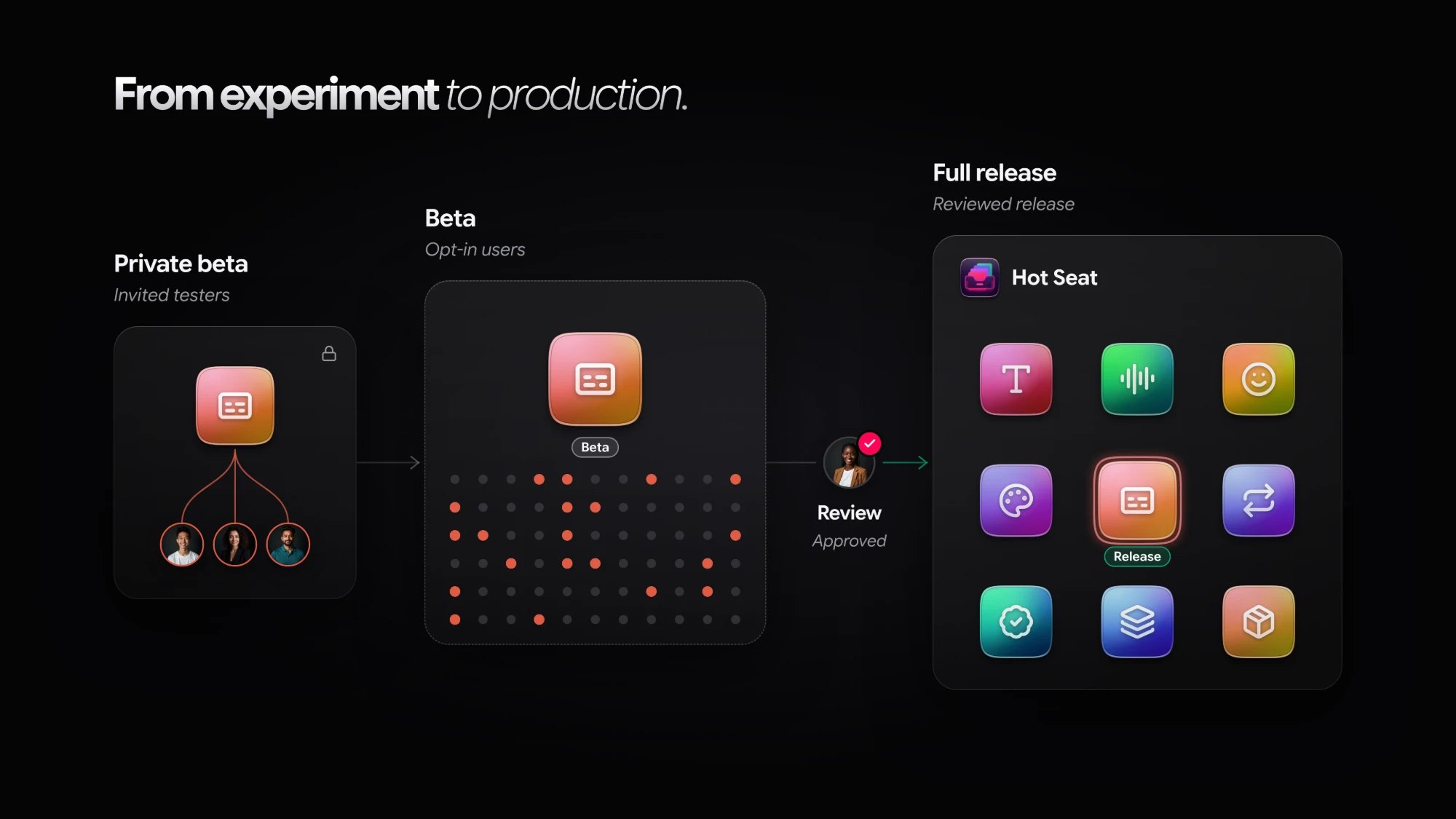
I also shaped how tools move from experiments into wider use. Authors can invite specific testers into a private beta, make a release available to people who opt into betas, and request review before it becomes available to everyone. That distinction matters: being able to try something isn't the same as endorsing it for production.
Hot Seat is a different kind of project from MDKit Pro. MDKit Pro tackles the repetitive work involved in producing motion. Hot Seat tackles what happens when more people across a team start building their own solutions.
I wanted colleagues to have the freedom to experiment, without creating extra work or uncertainty for everyone else. Leading Hot Seat meant thinking beyond the interface: how people contribute, how tools reach users, how feedback finds its way back, and how a promising experiment becomes something the team can rely on.
The best outcome isn't a busier toolbar. It's more useful ideas finding their way into everyday work.