Boxer
Native Mac Product
Building a better media tool. Rethinking how to make its launch film.
I designed and released VertX, a native Mac app that turns repetitive media tasks into reusable workflows.
For its launch film, I explored a different approach to motion design, directing editable animation through code.
Converting video, resizing images, trimming audio or combining PDFs shouldn't require a full editing session. But those little jobs add up, especially when you're repeating the same steps across dozens of files.
I kept finding myself moving between apps or writing FFmpeg and Python commands to get them done. I wanted a focused native Mac tool for the processing around creative work, without trying to build another editor.
So I designed, built and released VertX. It handles video, images, audio and PDFs, but the important idea wasn't any one conversion. It was connecting the steps.
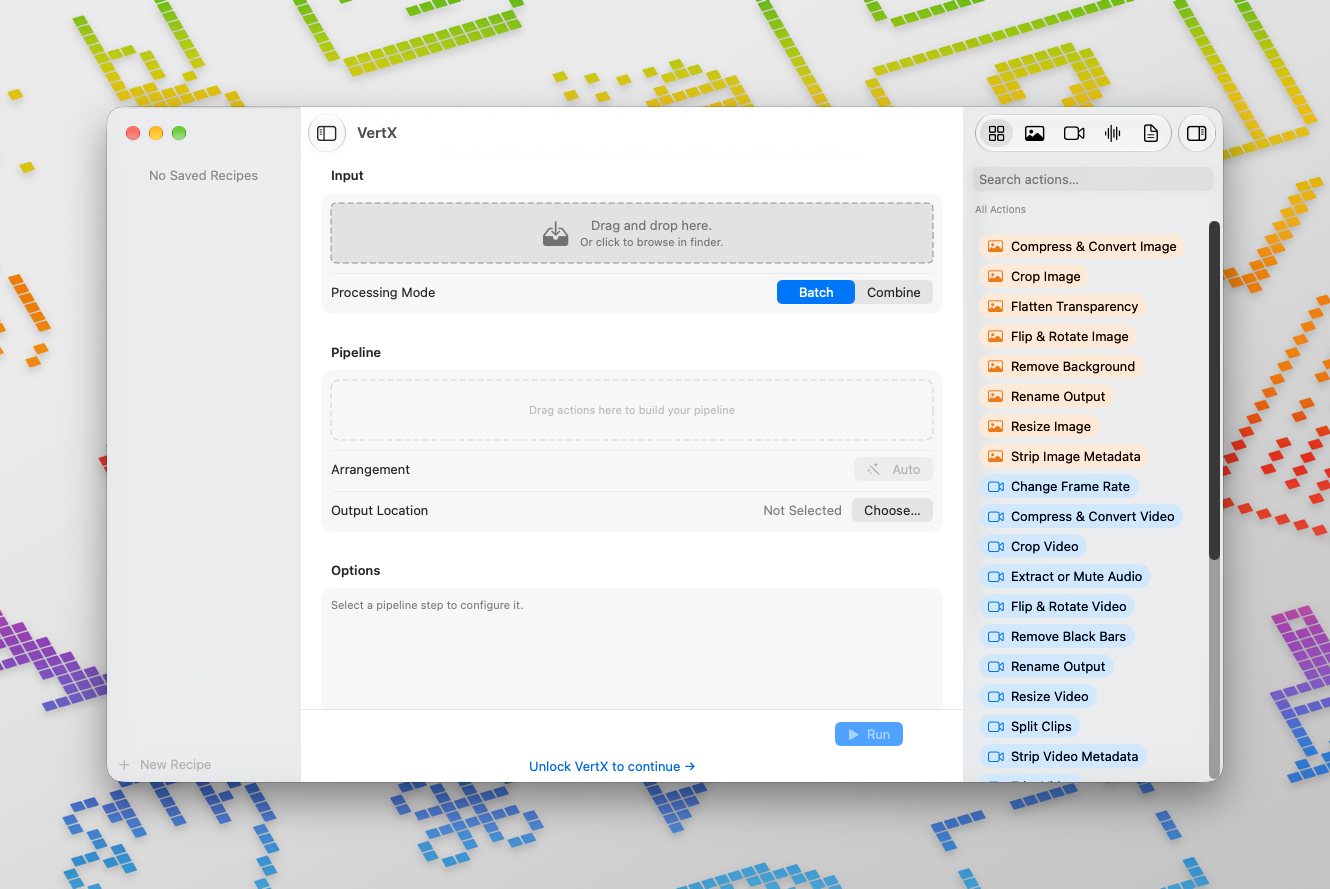
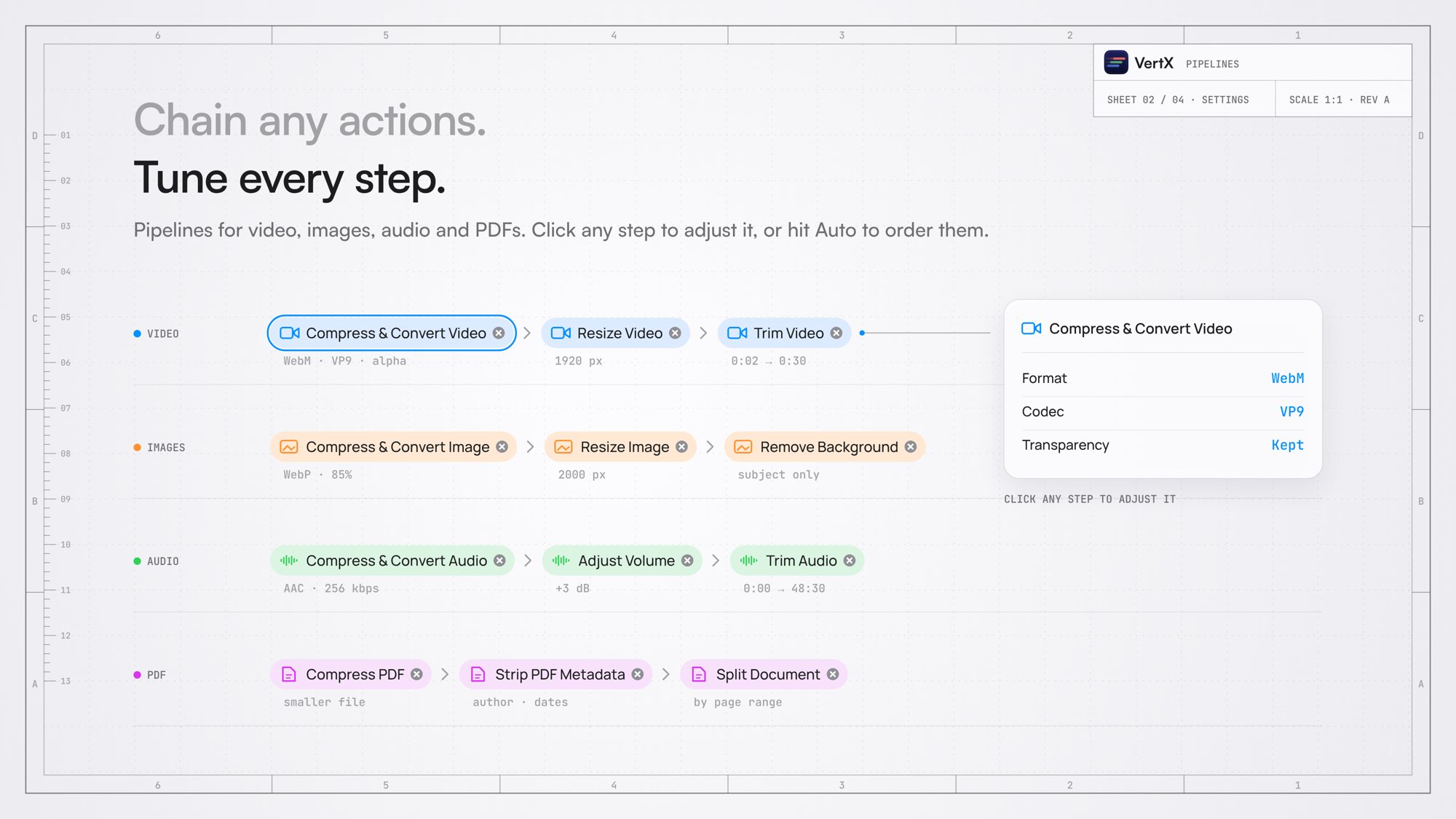
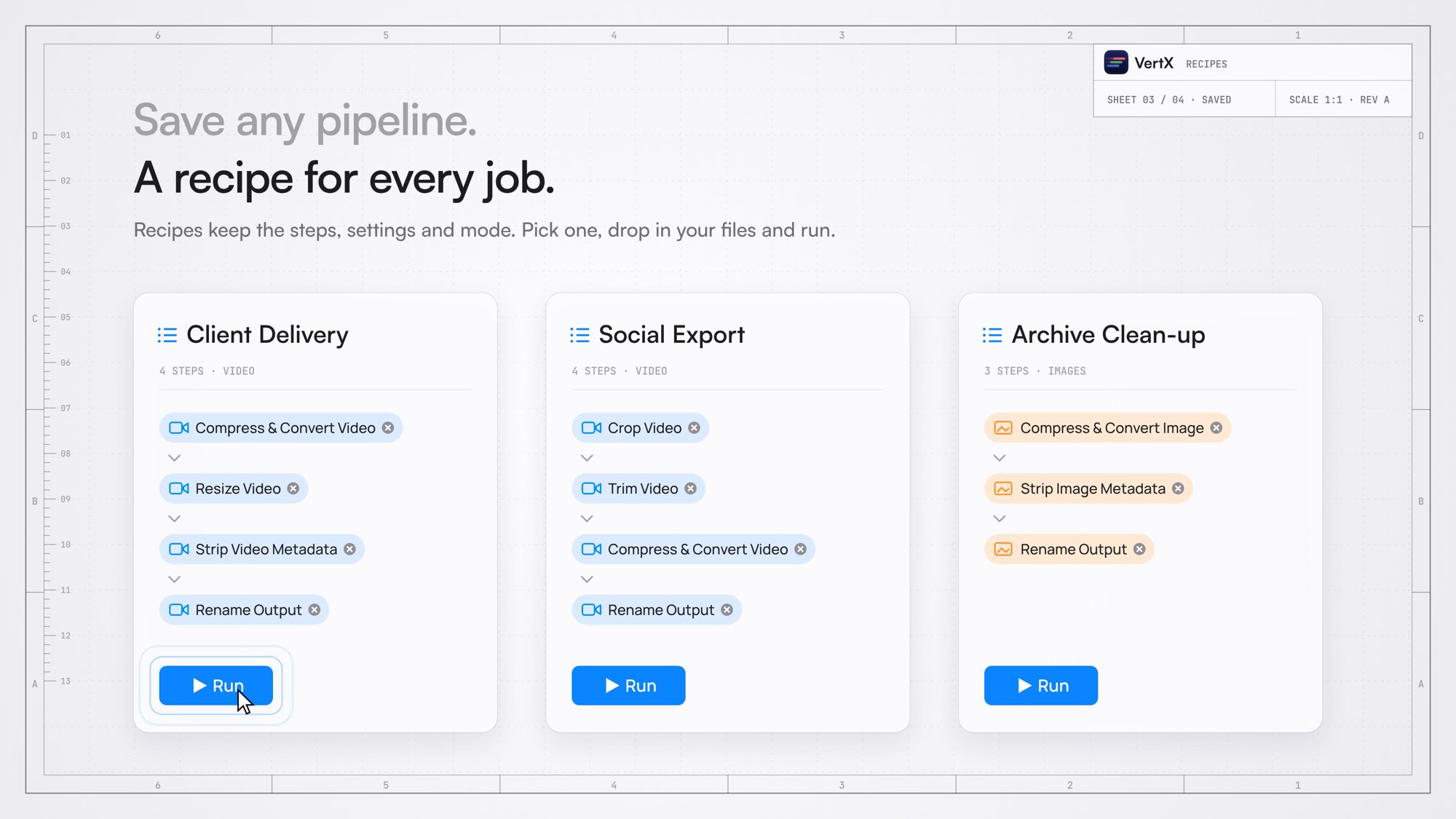
Taking inspiration from Apple Shortcuts, I built a library of actions you can arrange into a pipeline. Convert, resize, crop, trim or rename files, reorder the steps, then save the whole process as a reusable recipe.
One design decision came directly from my own workflow. I'd originally built VertX to run the same pipeline across a batch of separate files. But I also needed to take around 120 PNG frames from Blender, combine them into an animation and convert the result into video formats that preserved transparency.
That led to two distinct modes: Batch for processing files individually and Combine for turning several inputs into one output. It added a choice to the interface, but made the tool considerably more useful.
I handled the product direction, design, development and release independently. VertX is available on the Mac App Store (opens in a new tab).
For the launch film, I wanted to explore something beyond my usual After Effects and Blender workflow: could I direct an entire motion-design film through code, working with an AI coding agent?
I used Claude with React, JavaScript Canvas and Remotion. Claude wrote and revised the code behind the scenes; I developed the creative direction, shaped the narrative, judged the compositions and motion, and refined the timing and edit.
The first direction felt too much like a conventional software promo, so I moved away from it. The final film uses an exploded, isometric world in which media files and processing steps become physical forms you can follow through the sequence.
Importantly, this wasn't AI-generated video. The animation was code-generated, with editable scenes, precise timings and repeatable renders. That control mattered to me. It also taught me that directing motion through an LLM isn't automatically faster: you still need to make the decisions about composition, choreography and rhythm, but the way you make them changes.
VertX brought two interests together: building useful software and finding new ways to make motion. The film showed me both the potential and the friction of working this way, and helped shape my thinking about a more hands-on, predictable environment for code-driven animation.
I made VertX to simplify the work around making things. Its launch film became an experiment in how the making itself might change.